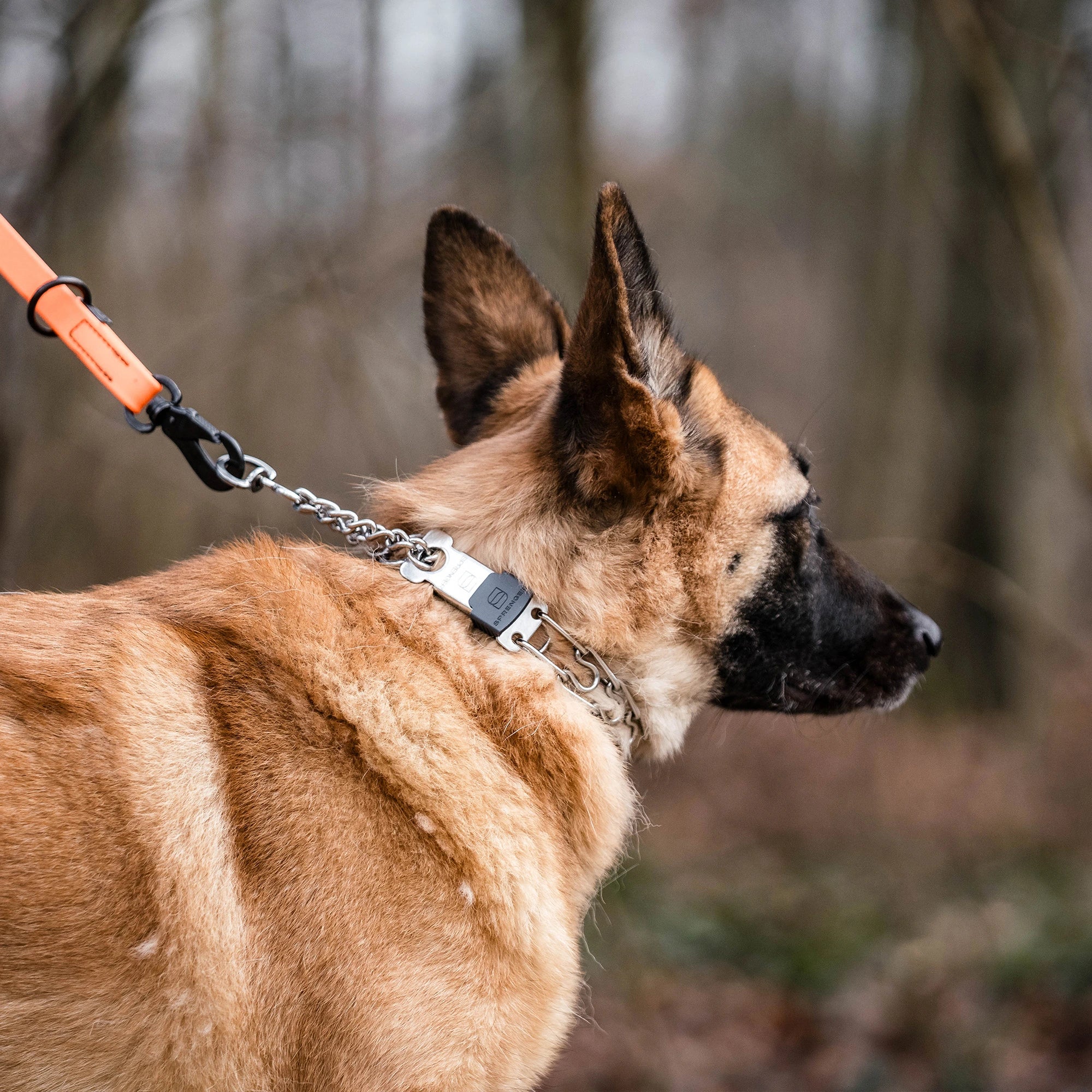
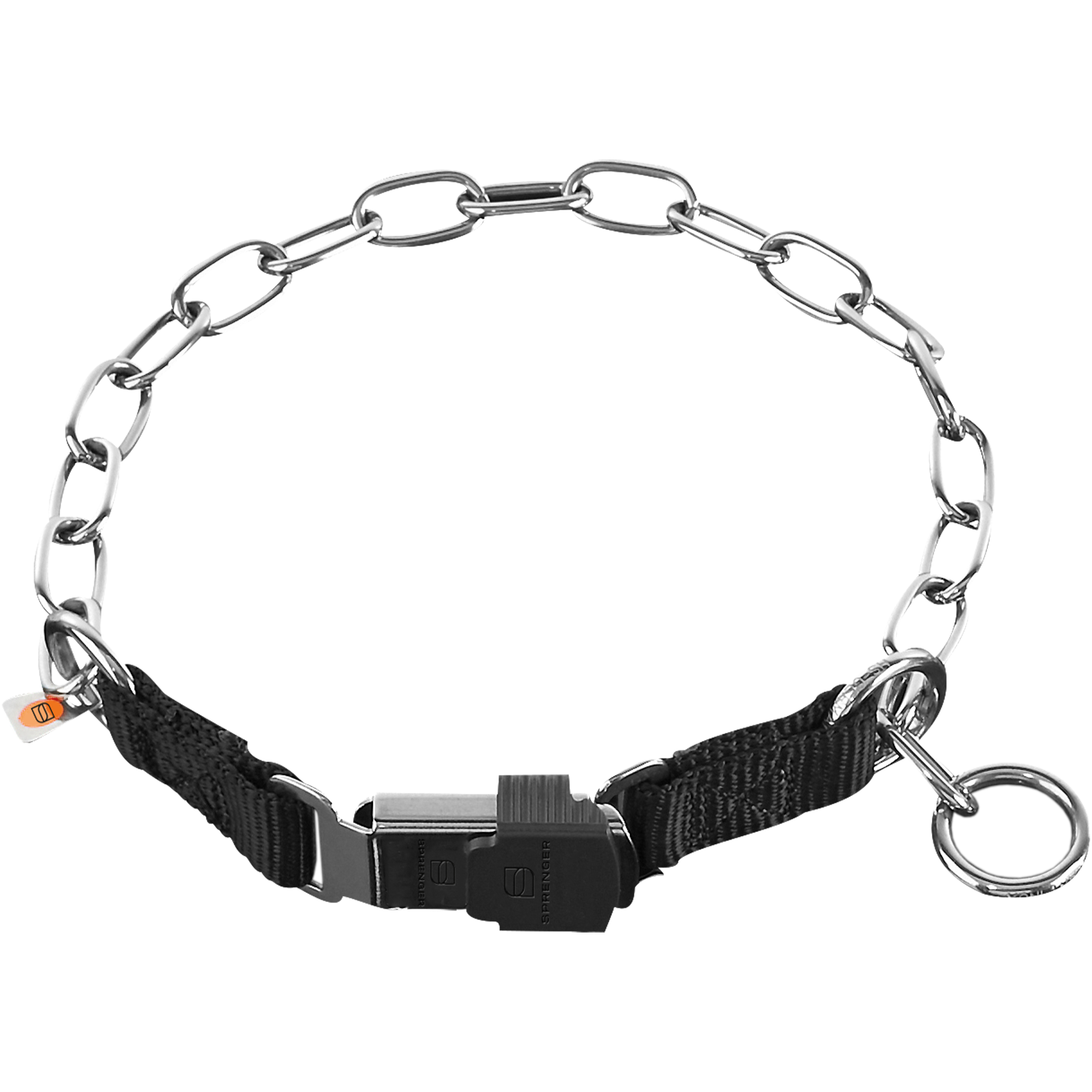
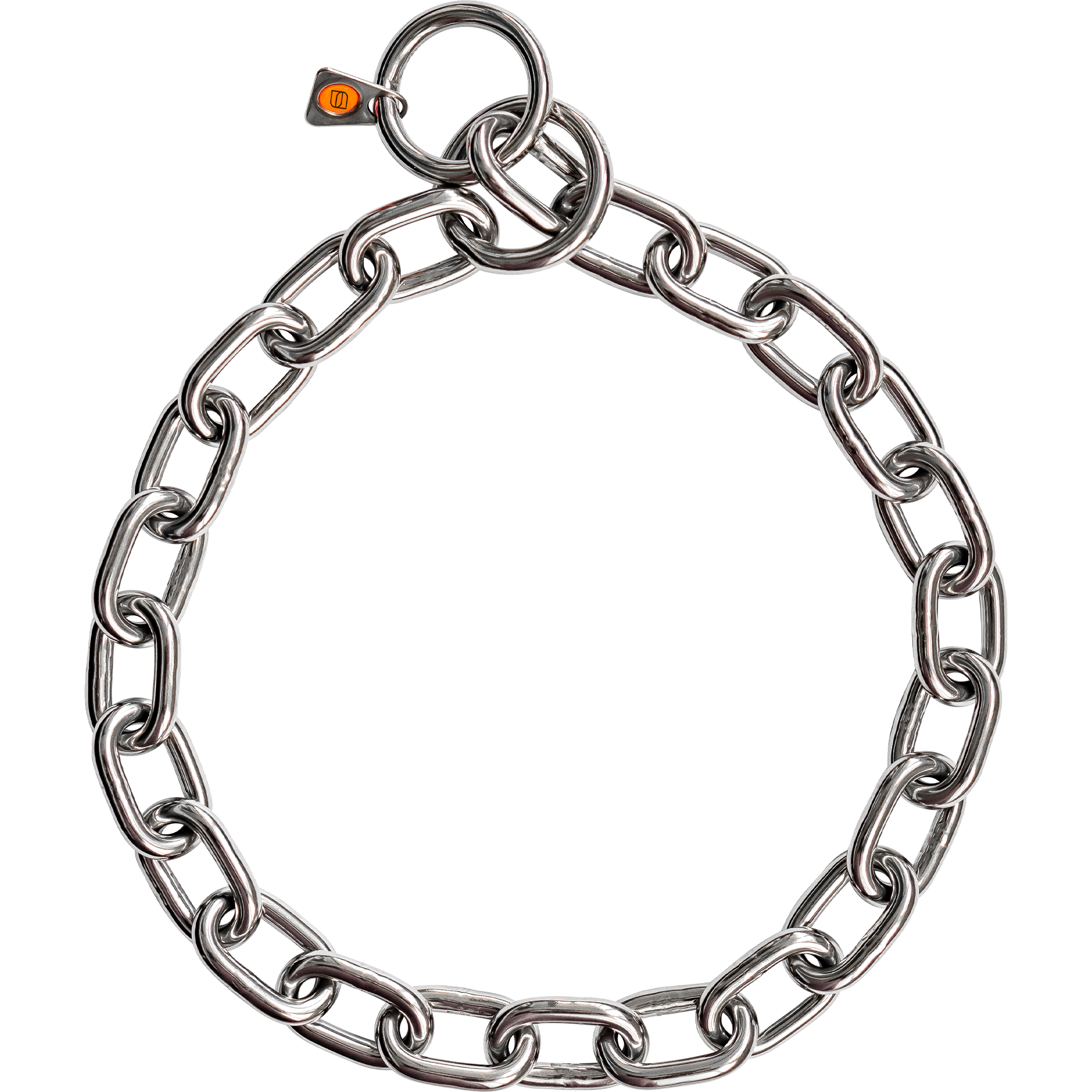
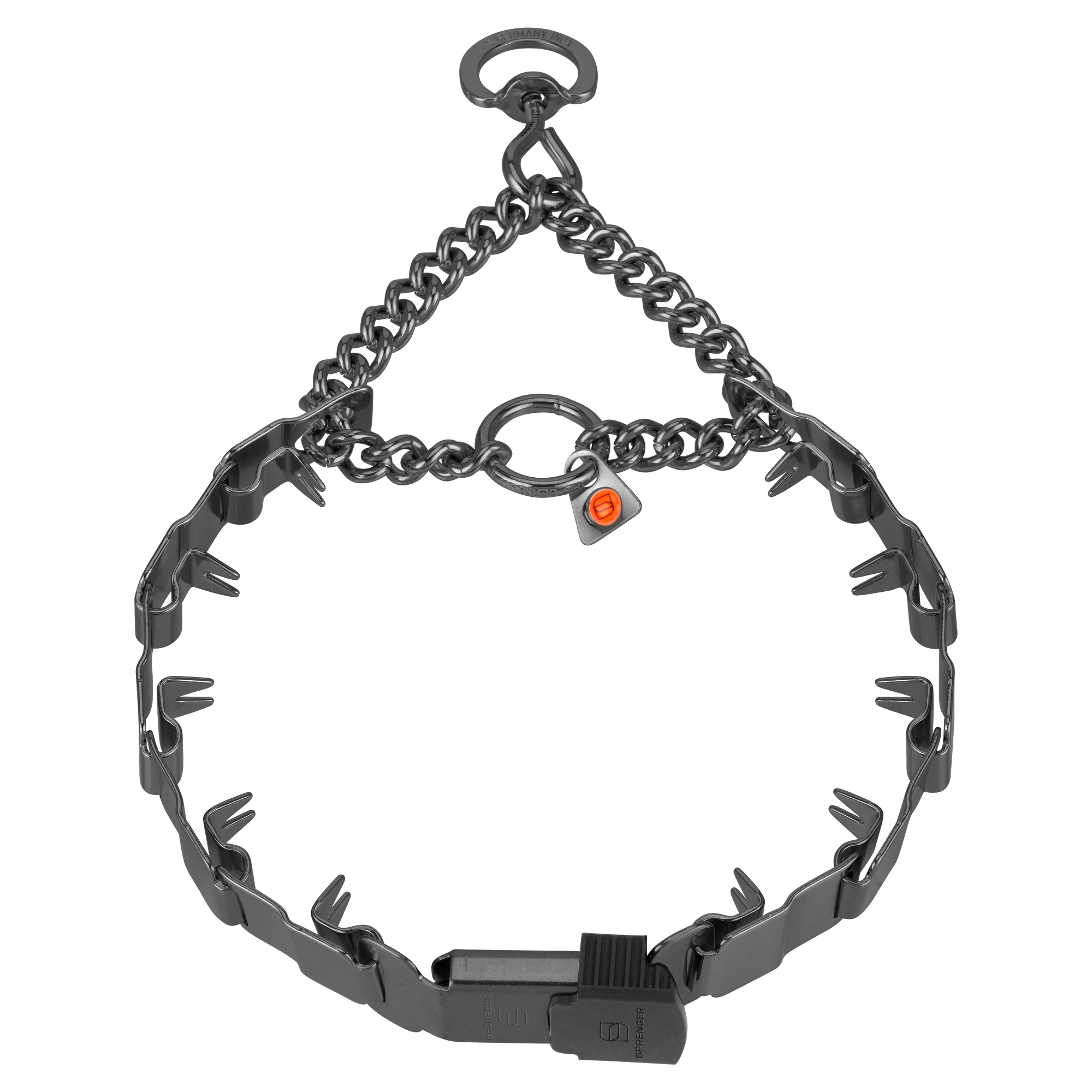
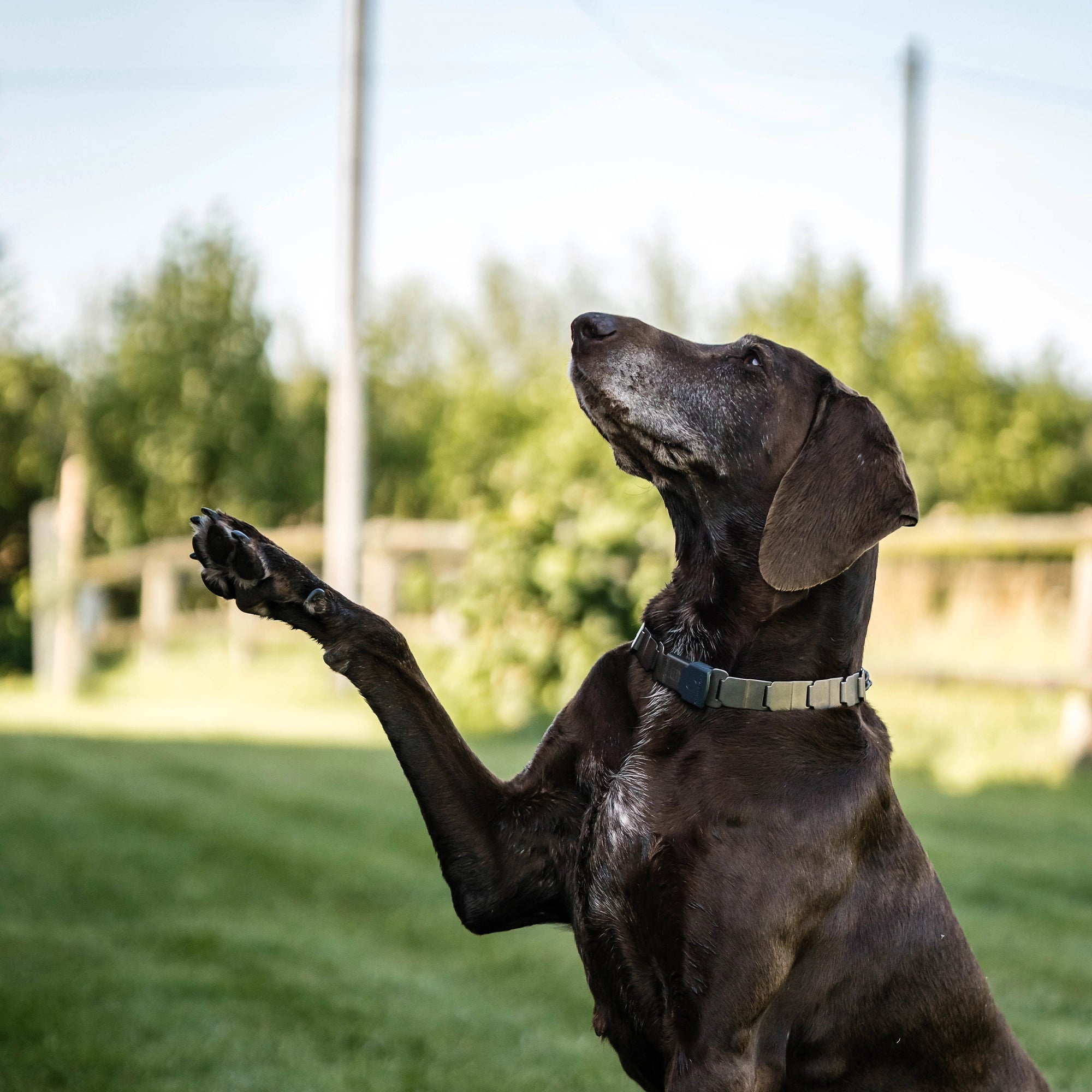
Which version – hook, assembly chain, or two rings – is right for your dog depends on their type and your needs:
Two rings: For experienced dogs and active dog sports, since it can be used with or without correction.
With assembly chain: Easy to put on and take off, plus gentle pull limitation – ideal for anxious dogs and adult dogs.
With SPRENGER hook: Easy to put on and take off, especially suitable for growing dogs and for dogs with a head circumference significantly larger than the neck circumference, since the collar doesn't need to be pulled over the head.
How do I find the right size for a chain collar?
Chain collars without a pull stop (colloquially known as choke collars) are not adjustable and must be pulled over the dog's head. Add 5–7 cm to the measured neck circumference (for 2 mm chains, only 2–4 cm, due to the smaller end rings), and also compare the calculated length with the head circumference measured at its widest point.
Chain collars with an assembly chain (martingale) are not always adjustable. Add 5–8 cm to the neck circumference (for 2 mm chains, 3–5 cm), and here too check the head circumference at its widest point. Models with a hook don't need to be pulled over the head, but still allow a bit of margin – add 5–8 cm here as well.
Chains with a hook and no pull stop are adjustable and don't need to be pulled over the head – simply choose according to the neck circumference, with a bit more length for growing dogs.
Which chain collar is suitable for long-haired dogs?
Long-link collars: The large, elongated links let the coat slide through easily, helping to prevent hair breakage, heat buildup, and itching.
Is a chain collar suitable for every dog?
As a general rule: chain collars should only be used on dogs that are already leash-trained.
Chain collars with an assembly chain, pull stop, hook and/or ClicLock cannot choke the dog and are animal-welfare compliant. They work well as extra security for anxious dogs or as a loose-fitting collar for dogs that need little guidance on the leash. Chain collars without any stop should be retrofitted with a shackle or split ring, or clipped to the "dead ring", so that no choking effect can occur.
How should a chain collar fit around the dog's neck?
A chain collar should be chosen to match the dog's neck circumference and should fit neither too tight nor too loose. It should be easy to put on without restricting the dog. When choosing, pay attention to the length, link shape, wire gauge, and closure type.
Which chain collars are suitable for large dogs?
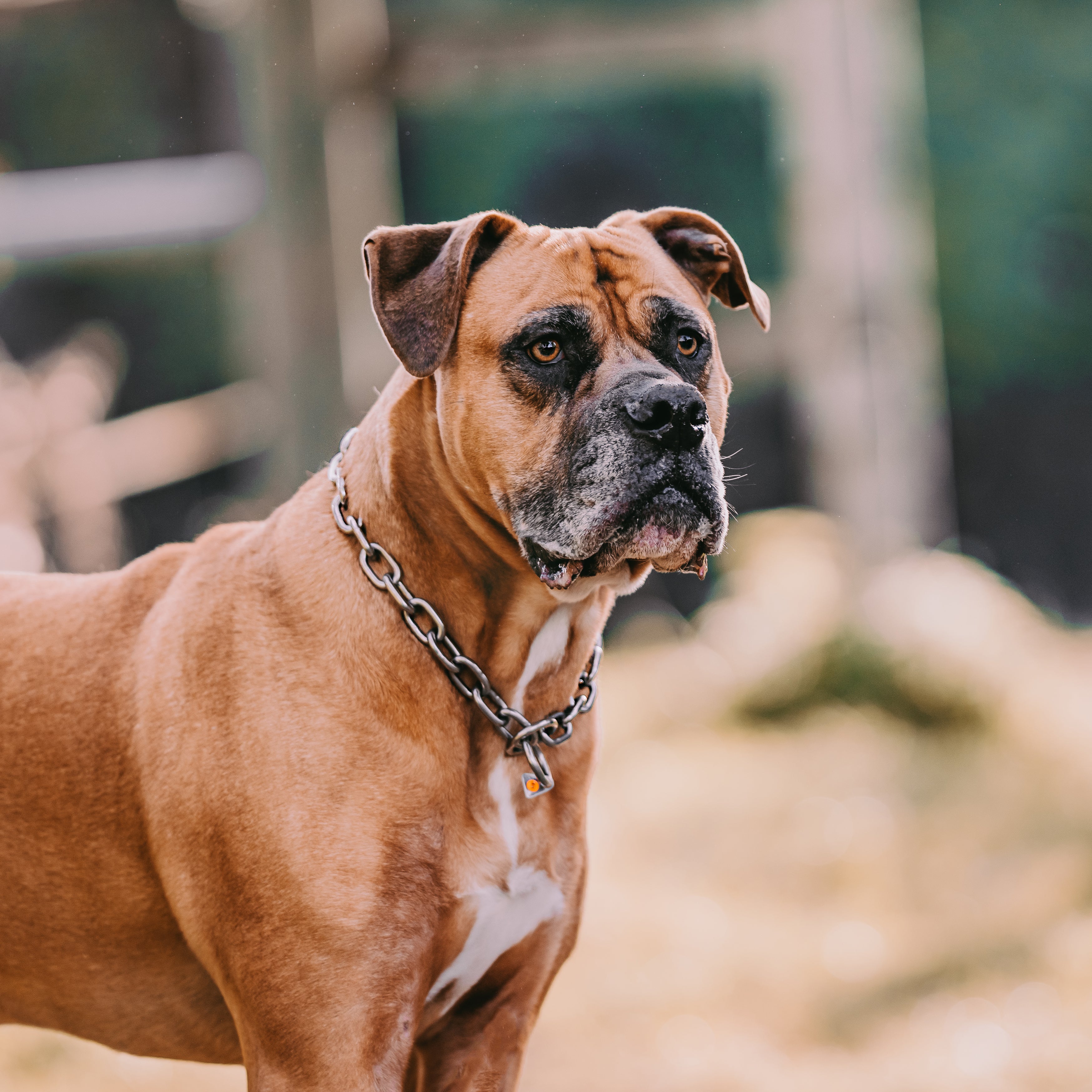
For large dog breeds, we recommend a wire gauge of 4 mm (e.g. German Shepherd, Rottweiler, Husky), and for particularly large breeds such as the Dogue de Bordeaux or Cane Corso, a 5 mm wire gauge. For especially spirited dogs or dogs that are unusually strong for their breed, we recommend choosing one wire gauge stronger.
When should I replace a chain collar?
Three clear warning signs: wear on the links (the wire no longer looks round and even at the contact points), visible damage such as deep notches, or bent chain links. Check the collar regularly, especially after heavy use – there's no fixed lifespan, as it depends on material and use. CUROGAN is somewhat softer than stainless steel and therefore tends to wear out faster.
Which chain collar is right for dogs – what link types are there?
Long-link collars for long coats (gentlest on the coat), medium-link collars as an all-rounder for short, medium, and long coats, and collars with round links (fur-saver collars) specifically for short coats, as they offer a flatter, more comfortable contact surface.
What's the difference between stainless steel and CUROGAN?
Stainless steel is the hardest material in our range, offers the highest breaking load, and is especially durable – the classic choice for strong dogs. CUROGAN is a nickel-free copper alloy, also made from solid material and rust-free, but minimizes coat discoloration and allergic reactions in around 90% of affected dogs. That's why we recommend CUROGAN for dogs with light or white coats.
What accessories are useful for dog chain collars?
Useful accessories for dog chain collars include shackles, split rings, safety clips, or coupling straps.
What's the difference between short-link, medium-link and long-link collars?
Short-link, medium-link and long-link collars differ in the size and shape of their links, and therefore in their suitability for different coat types. Long-link collars have large, elongated links that let the coat slide through easily, reducing friction – making them especially suitable for long coats. Medium-link collars are shorter, narrower and more oval-shaped, creating a bit more friction and making them true all-rounders for short, medium and long coats. Collars with round links, known as fur-saver collars, are even more compact, interlock closely and lie flatter against the coat – they create the most friction and are therefore best suited for short coats.
How do I find the right size for a dog's chain collar?
The measurement depends on the version:
Without hook (pulled over the head): Measure the neck circumference and add extra length depending on the version – assembly chain: +5–8 cm, without pull stop: +5–7 cm (less for 2 mm chains). Also measure the head circumference at its widest point – the chain length must be greater than the head circumference.
With SPRENGER hook: No need to pull it over the head, simply go by the neck circumference.
Exact tolerances can always be found on the respective product page. Important: the collar must not choke when pulled taut.
Which chain collar is right for my dog?
The right collar depends on two factors: the version (how the collar is put on the dog) and the wire gauge (strength matched to the dog's size).
Versions:
Two rings: For experienced dogs and active dog sports, can be used with or without correction.
With assembly chain: Easy to put on and take off, plus gentle pull limitation – suitable for anxious dogs and adult dogs.
With SPRENGER hook: Easy to put on and take off. Ideal for growing dogs and for dogs with a head circumference significantly larger than the neck circumference, since the collar doesn't need to be pulled over the head.
Wire gauge:
2 mm: Small dog breeds, e.g. Chihuahua, Pug, Dachshund, Jack Russell
2.5 mm: Fur-saver collars with round links, only for short-haired dogs with a calm temperament and good leash manners
3 mm: All-rounder for medium-sized breeds, e.g. Beagle, Border Collie, Australian Shepherd
4 mm: Large dogs, e.g. German Shepherd, Rottweiler, Husky
5 mm: Extra-large dogs, e.g. Dogue de Bordeaux, Cane Corso, Bullmastiff
Tip: For particularly long coats, we also recommend our long-link collars.
Which dog leash is suitable for hunting dogs?
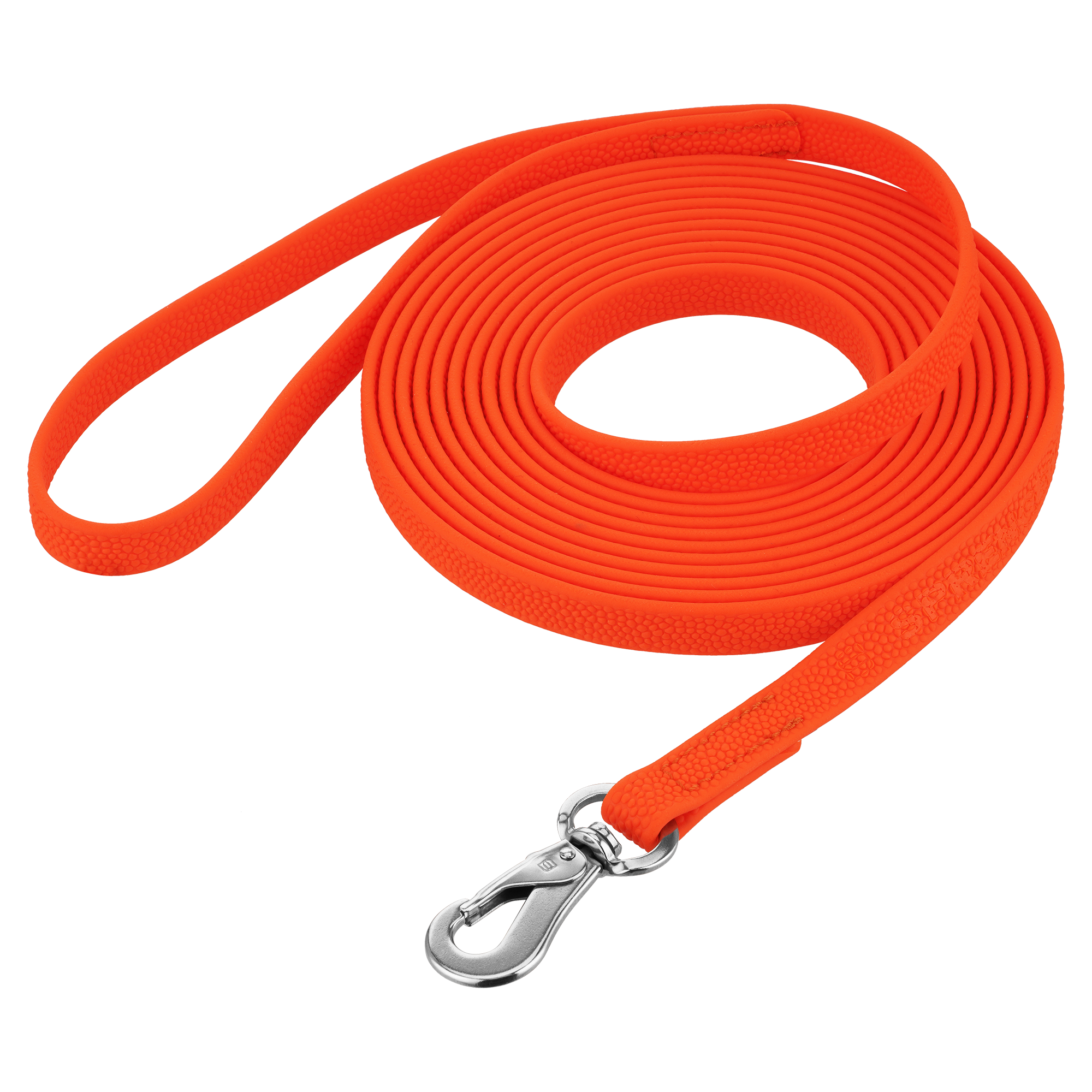
For hunting dogs, sturdy, weatherproof, and easy-to-grip leashes are suitable. Depending on the use, guide leashes, tracking leashes, field leashes, or special blood-tracking leashes can be appropriate. Sturdy fittings, a grippy material, and a length matched to the specific situation are important.
How do I properly care for collars, leashes, and harnesses?
Nylon and fabric collars or leashes can be machine-washed at a maximum of 30 °C with a gentle detergent (e.g. wool detergent) – ideally inside an old pillowcase to protect the drum from metal parts. For spot cleaning, it's better to wash by hand with warm water, a bit of soap, and a soft brush. Biothane can simply be cleaned with clear water and a soft cloth. Afterwards, let everything air dry, never in direct sunlight or on a radiator. Metal parts such as buckles, carabiners, and chain links should be checked regularly for wear or damage.
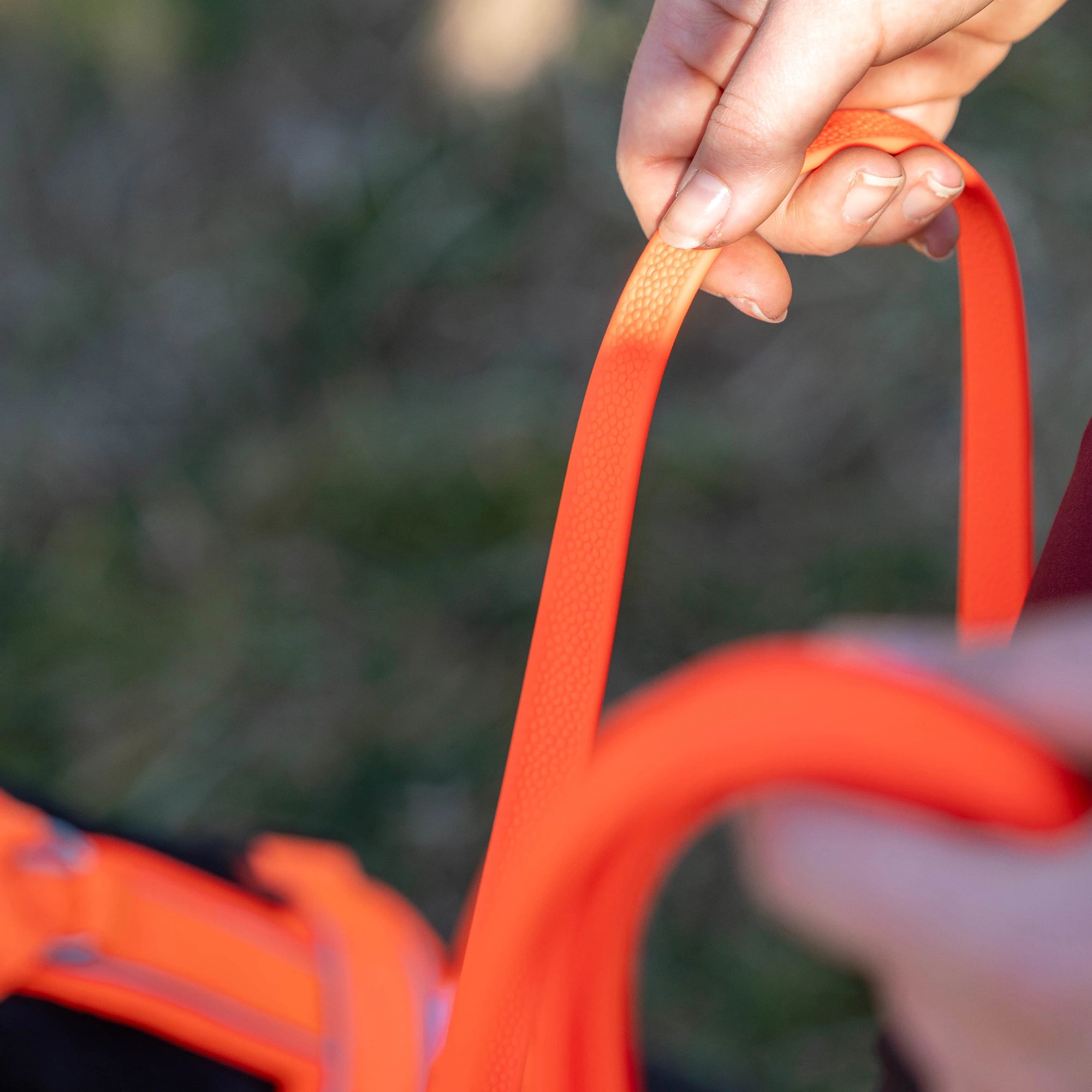
Collars and leashes made of BioThane can be cleaned very easily with water and a cloth.
Which dog leash is suitable for everyday use?
For most everyday situations, a standard leash of around 2–3 m in length is suitable. We recommend a 3-times adjustable dog leash, as thanks to its two carabiners it can be flexibly adapted to different situations.